


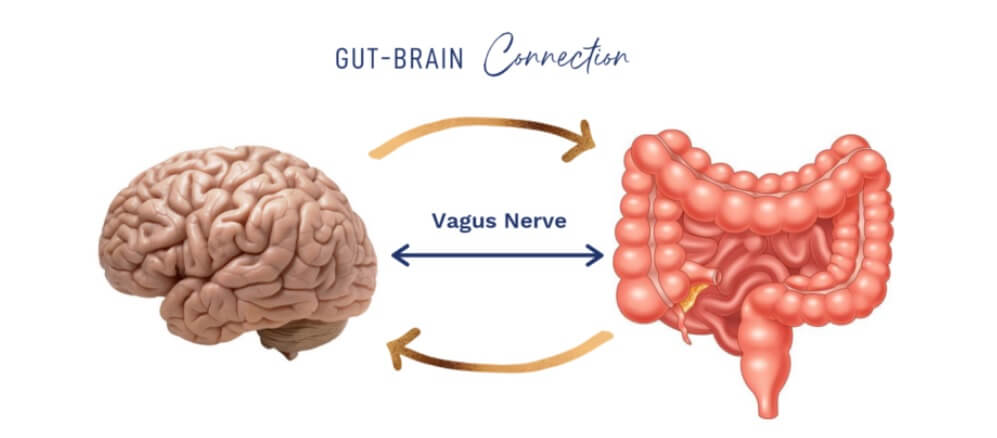
You’re likely familiar with the idea of the gut-brain connection and how stress can impact digestion. Take a moment to think back on a time when you had a sudden, extremely stressful situation or event… perhaps you suddenly experienced nausea, stomach cramps, or even worse had to flee to the bathroom!
It is clear to most of us how acute stress can send the gut into fits! But have you thought about how low-grade chronic daily stress may be impacting your gut?
What you may not know is that this connection between the brain and the gut is mediated by a very important nerve called the vagus nerve. Optimal functioning of this vital nerve is essential for a healthy gut and daily bowel movements. The good news is you can learn simple exercises to strengthen it and improve its function when it’s not working optimally.
It is important you know how this nerve works so you can be empowered to support it for good gut function!
Understanding the Vagus Nerve
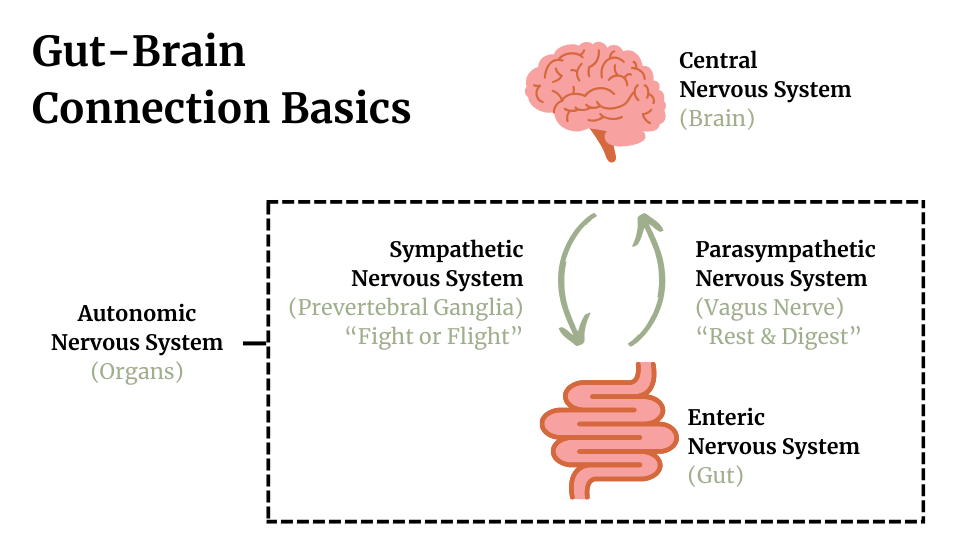
One of the roles of the nervous system is to regulate the functioning of our internal organs including the colon. The nervous system has two opposing functions:
- The parasympathetic nervous system regulates homeostasis, or what we describe as ‘rest and digest’. This is the relaxed and preferred state of the body and what we should be aiming for most of the time.
- The other is the sympathetic nervous system which regulates the stress response or what we might describe as ‘fight, flight or freeze’. You may have heard an analogy for this – great for running away from a lion or bear. In this state, good digestion is not going to be possible (or optimal).
When stressed, our body puts digestion on the back burner in favor of blood flow to our extremities and musculoskeletal system and other life-sustaining functions to help us stay alive. (It does not know the difference between fleeing from a lion or chronic stress caused by anxious ruminating thoughts). The digestive system basically shuts down and a lack of motility throughout the whole system can cause constipation.
The Link Between Vagus Nerve and Constipation
If you are stuck in a sympathetic-dominant state, or fight, flight, or freeze, for an ongoing period the vagus nerve can become weak and lose its “tone”.
Likewise, chronic constipation can weaken the vagus nerve’s tone, thereby disrupting and diminishing the communication between the gut and the brain. This communication breakdown can hinder peristalsis, the wave-like muscle contractions that move food through the digestive tract, leading to constipation and poor motility.
So both in a chronic state of chronic stress and/or constipation, vagal tone becomes weak.
The good news is… you can learn to strengthen the vagal tone and activate it for better function!
Activating Your Vagus Nerve
Recent research by neuroscientists has identified the following strategies to help stimulate our vagus nerve and get our neurons firing again.
- Gargling and gagging
- Singing and humming
- Alternate nostril breathing and deep breathing
- Cold exposure
- Exposure to sunlight
- Meditation
- Laughing
- Music therapy
- Supplements (probiotics and omega 3 fatty acids)
- Body work such as massage, acupuncture, cranial sacral therapy
- Essential oils
Daily Practices To Support your Vagus Nerve
Start with simple exercises like gargling and gagging. Gargling and gagging contract the back of the throat, which activates the vagus nerve. This combination is a great pair because you can do them around the time you brush your teeth. Gargling is simple and easy and can be something you may already do…gagging is more like sprint training for your vagus nerve and may take some getting used to. The idea is to incorporate these exercises into your daily routine, ideally twice a day.
Using a small amount of water, gargle vigorously for 30-60 seconds or more until your eyes tear up. Try for 30 seconds and build up. Gagging is best achieved using a tongue depressor or your toothbrush. Gently press on the back of your tongue to make yourself gag. Please do not poke the back of your throat or use a sharp object. Keep in mind, the goal is to elicit a gag reflex and ideally bring tears to your eyes.
Commit to gargling and gagging twice daily to activate the vagus nerve.
Next, move on to incorporating some of the other strategies such as singing and humming daily. This will just elevate your mood too!
Once you accomplish these strategies, then focus on daily sun exposure, good breathing techniques, and exercise (especially before meals)… these don’t cost a dime but will take planning and practice.
Next, consider investing in some body work on a monthly basis.
When it comes to essential oils, my absolute favorite is from Vibrant Blue called the Parasympathetic Blend. I use this behind my ear almost daily to support my vagus nerve and love that it offers a calming and relaxation effect.
(If you want to try it for yourself CLICK HERE and use code Welcome10 for 10% off your order)
Ready to Improve Your Vagal Tone?
Remember, your gut health is an essential component of your overall well-being and can be supported in many ways, not just by food and supplements, but LIFESTYLE habits! You know have another “tool” in your gut health toolkit.
Nerve retraining is slow and steady work but will help lay the foundation for a properly functioning digestive system that is free from chronic constipation and enhances good motility, overall wellness, and ultimately, a PEACEFUL gut!
For more ways to support your Vagus Nerve I created this handout for you with information taken from one of my favorite little books; Activate Your Nervous System by Dr. Navaz Habib.
Activate Your Vagus Nerve
With these simple & effective practices
