


Proton Pump Inhibitors (PPIs) leading to low stomach acid (AKA: hypochlorhydria) should be used to temporarily address serious conditions, not treat everyday heartburn. There is one big (and recently discovered) reason to be wary of taking them: PPIs may increase your risk of contracting COVID-19.
PPIs are known to be among the top three most over-prescribed medications in America! Most of my patients are not aware of the side effects of these medications, nor do they understand the consequences of taking them for a prolonged time.
PPIs seem to be touted these days as the “the solution” for any GI ailment, when the reality is they can be the contributing factor to declining health and gut-related disorders such as poor digestion, slow motility, gas, bloating, fatigue, constipation, diarrhea, GERD, or nutrient deficiencies.
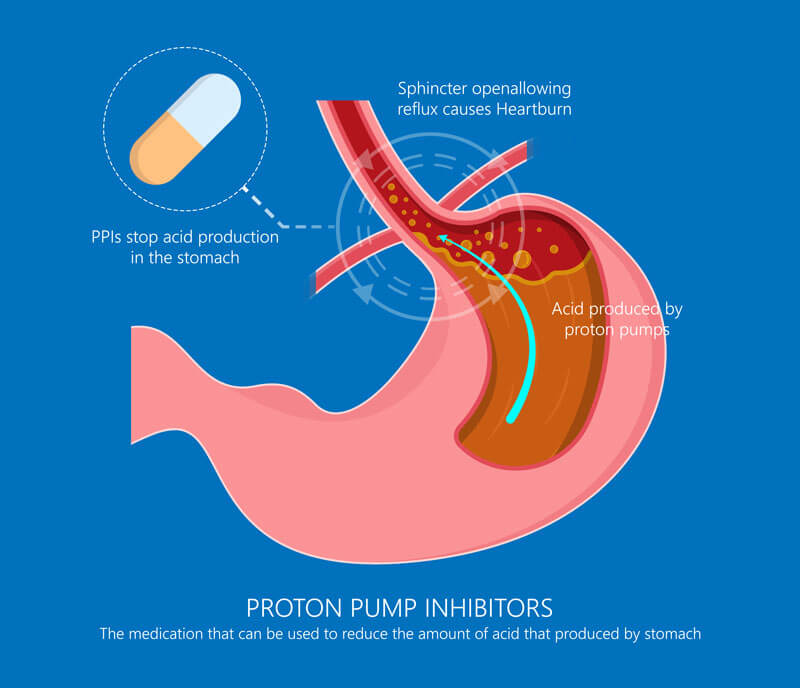
PPIs work by blocking secretion of stomach acid. Adequate stomach acid is a first line of defense against pathogens like bacteria or viruses entering your body through your mouth. It is also essential to help with protein digestion and it functions to help absorb essential nutrients and minerals, like B12. Over the last decade we have learned that PPIs can negatively alter the gut microbiome causing an imbalance in the healthy bacteria that protect you by working with your immune system.
Research into these drugs provides insights into the risks of hypochlorhydria and suggests that, over the long term, inadequate stomach acid can:
- Increase the risk for gut infections like SIBO (1, 2, 3 )
- Impair nutrient absorption (calcium, magnesium, iron, B12) and potentially lead to conditions like osteoporosis and anemia (4)
- Impair digestive function in the esophagus and alter the healthy bacteria in the gut
The FDA warns that these medications should only be used for two-six weeks at a time, yet I have patients who have been taking them for years, if not decades! They have even been told by their practitioner or doctor that they are safe.
Nearly every week, I work to help people wean off of PPIs and other acid blockers and treat their GERD and other digestive symptoms using safe, natural PPI alternatives. Most importantly, we work to get to the root cause(s) of why they are experiencing chronic symptoms. Many are surprised to find out that they don’t have too MUCH acid but too little, and that is leading to their symptoms, poor digestion, and gut decline.
If you’re one of the few Americans who haven’t been offered a PPI and don’t know what they are, count yourself lucky! Just to clarify, PPIs are known as proton pump inhibitors and go by names you might have heard of like Prilosec (Omeprazole), Nexium (Esomeprazole), Dexilant, or Protonix (Pantoprazole). They are a class of medication that interferes with small “pumps” in certain cells lining your stomach in order to block its ability to secrete stomach acid (HCl).
I have a long list of reasons why you should be cautious of PPIs, unless you have an ulcer or acute condition for which they may be prescribed short term. I outline those below along with links to resources you can review for more information.
First, let’s get to the subject that’s still on our minds: COVID. You might not think acid blockers and COVID-19 would have anything to do with one another, but it turns out there is a compelling link between the two. Honestly, if you understand how they work, it is not at all surprising!
It’s been known for some time that taking a PPI and pneumonia could be related. It appears that taking a PPI increases your chances of catching pneumonia, and this effect is related to having too little acid in the stomach, although the exact processes are still unclear.
Researchers also have found that having an adequate level of acidity in your stomach (PH ≤ 3) impairs the ability of SARS-CoV to infect the body. SARS-CoV is a relative of SARS-CoV-2, the virus that causes COVID. So, as COVID concerns continue, curious researchers began checking into PPI usage and SARS-CoV-2 infection.
Their first findings are a strong sign we should be wary. In a national survey of 53,130 participants published in October in the American Journal of Gastroenterology, it was found that those taking PPIs had significantly increased odds of testing positive for COVID-19.
The researchers controlled for other factors that might be involved, which means it appears that just by taking a PPI, you might be increasing your chances of catching this potentially deadly disease. This is a cutting edge finding and it will need to be studied further, but it’s yet another reason to consider managing your GERD and other GI issues without PPIs and instead address diet, lifestyle, and underlying causes.
There are many effective ways to treat these symptoms without resorting to PPIs.
PPI Not Working? Do You Need More Convincing?
Here are nine other reasons why you should avoid PPIs unless you have an ulcer, pre-cancerous changes or another serious medical condition where PPIs may be worth the risk.
- PPIs are not indicated for long-term use. Depending on the condition, proton pump inhibitors are supposed to be taken from somewhere between 4 and 12 weeks. When used to prevent gastric ulcers in those who need NSAIDS or heal erosive esophagitis, the treatment duration can stretch up to 6 months. But many people start taking PPIs and just don’t come off — either because they’re using them to counter poor diet or lifestyle habits, because no one told them not to take them for long, or because PPIs need to be appropriated weaned down, as they can cause serious rebound acid production that sends people right back on them again if they suddenly stop “cold turkey.”
- PPIs are vastly overprescribed. PPIs are the #2 most over-prescribed drug after statins. Often they are prescribed in the absence of good evidence they are needed and at much higher levels than necessary. Even worse, symptoms of heartburn and GERD are often similar to the symptoms of the opposite condition, known as hypoacidity or hypochlorhydria. As I’ve said, many of my patients have been prescribed PPIs when they actually had too little stomach acid to begin with!
- PPIs can lead to serious infections. When you think of your body’s infection defenses, you may never have considered the stomach. But its low PH from stomach acid is a primary barrier to pathogens entering your body through the GI tract. When you don’t have enough stomach acid, infections ranging from food poisoning to parasites, fungi and enteric viruses can take root and cause havoc. Even respiratory viruses can aspirate into the lungs once established in your digestive system. One especially serious consequence of PPI use can be the overgrowth of the clostridium difficile bacteria, also known as C.diff., which can cause long-term, difficult-to-treat diarrhea along with intestinal inflammation and potentially life-threatening complications.
- PPIs can alter your microbiome. Not only can they lead to C. Diff, but they can also cause many kinds of dysbiosis and alterations to your vital, health giving microbiome. Studies show that PPI use changes the composition of the bacteria in your mouth, esophagus, stomach, and small and large intestines, increasing the risk of infections and disease throughout. If you’ve been reading my work for long, you know that your trillions of gut bacteria are key to lowering inflammation and maintaining the health of your gut, your immune system and most other systems in your body. With PPI usage, this delicate system can become scrambled. For instance, PPIs can cause the balance of bacteria in your esophagus to favor certain bacterial species linked to esophageal cancer. They can also contribute to the development of SIBO, an overgrowth of bacteria in your small intestine that can be painful and challenging to treat. Restoring a balanced and healthy microbiome goes a long way toward treating gut disorders and many chronic conditions, and this approach underlies most of my functional nutrition work. The fact that a short course of PPI usage can alter the microbiome so profoundly is a huge red flag that they can cause long-term problems.
- PPIs can cause deficiencies of essential nutrients. PPIs have been shown to decrease the absorption of important vitamins and minerals. Stomach acid helps with the absorption of a number of nutrients, including folate, vitamin B12, ascorbic acid, beta-carotene, iron, and some forms of calcium, magnesium and zinc. One vitamin deficiency associated with acid suppression from long term PPI usage is low B12, which can cause weakness, fatigue and nervous system problems. Low levels of stomach acid can also interfere with the digestion of protein, ironically leading to symptoms of indigestion.
- PPIs increase your risk of bone fractures. Long term meta-analyses show that PPI usage carries an increased risk of major fractures, especially of the hip. The reasons for this are not fully understood, but it’s thought that there’s a relationship between PPIs causing hypochloridia and increasing the production of the hormone gastrin. These changes negatively affect the way your body breaks down and builds up bone, the way you absorb minerals from your diet, and even your muscle strength through lowering your B12 levels — all of which are thought to play a role in increasing your fracture risk. As a functional nutritionist, I have to stress that it is much easier to treat your heartburn through diet and lifestyle changes now than to treat bone loss or repair your hip down the road!
- PPIs can cause kidney disease. PPIs have been linked to several adverse events related to the kidneys, including dangerously low levels of sodium and magnesium, and the development of acute interstitial nephritis (AIN). Although the proportion of people on PPIs who develop nephritis is low, PPI usage is one of the most common causes of drug-induced AIN in developed countries and is contributing to the burden of chronic kidney disease in our population. One of the biggest challenges is that PPIs are often taken over the counter, so there may be little monitoring of kidney function, even in those at risk of complications.
- You can treat heartburn and GERD without PPIs. The key is to first determine the underlying cause and address this, which may be related to poor eating habits, poor digestion, lack of enzymes, SIBO, dysbiosis, low stomach acid, etc. Natural products such as zinc carnosine, L-glutamine, deglycyrrhized licorice extract (DGL), aloe vera, and other products help soothe, coat, nourish, and heal the mucosal lining and also strengthen the tone of the lower esophageal sphincter (LES). Lifestyle practices involving stress management, deep breathing, acupuncture and massage may be helpful. It is important to take an individualized approach. H2 (histamine) blockers are another type of OTC medication that reduce stomach acid but do not block it like PPIs do, and therefore have fewer side effects.
- You may actually need more stomach acid, not less. If you’ve been experiencing the symptoms of indigestion, heartburn or GERD, low B12, burping, variable BM’s…you may actually have too little stomach acid, rather than too much! It sounds counterintuitive, but the symptoms caused by too much and too little HCl overlap and can be easily confused. Fortunately, there are basic self/home tests you can use to identify the difference — The only way to technically check your levels is with a Heidelberg test, which is rarely done and often expensive. Check out my handout on hypochloridia and HCl self testing. It is not science-based, but a good method to test it out. Consider doing it at least 2-3 times to see if you get a consistent result.
Let Me Help You Find Better PPI Alternatives
If you’re like many patients who come to my nutritional practice, you may be feeling overwhelmed reading this. You know PPIs are just masking your symptoms without solving the underlying issue and you now know they are causing risks you weren’t aware of at the start.
They’re hard to get off of and it can be difficult to know what else to do to treat the original problems. I’ve been there and I understand it can be daunting, but it IS possible! I have helped many clients achieve freedom from PPIs and restore their gut.
Every person’s situation is unique, it is a process that takes a little time and dedication, but there is no price tag on improving quality of life. I would love to help you take steps to balance the health of your gut and optimize all of your body’s systems for wellness now and in the future. And a bit more protection against COVID won’t hurt, either! Talk to me about PPI alternatives today.
If you’d like to take steps to resolve your heartburn or GERD without PPIs or other acid blockers, you may be interested in my Gut Restoration Program — or feel free to grab a quick complimentary consultation appointment to discuss your situation.
