


The Truth About Probiotics
Probiotics: What Works, What Doesn’t + How to Choose the Right One for Your Gut
If you’ve ever felt confused, frustrated, or worse, after taking a probiotic…you’re not alone.
With over 2,000+ probiotic products on the market, probiotics have become one of the most talked about, and misunderstood, tools in gut health. From supplements and functional foods to beverages and even skincare, they’re everywhere.
But here’s the real question…
→ How do you know if what you’re taking is high-quality, safe, or even right for your gut?
Because in my clinical experience, probiotics can be incredibly helpful…or they can backfire!
Let’s Start Here…
Have you ever said yourself or heard someone say:
- “Probiotics made me feel worse.”
- “Probiotics completely changed my gut – I feel amazing.”
- “Probiotics did nothing for me.”
The truth is… all three of these experiences can be valid.
Because probiotics are not inherently “good” or “bad.”
→ They are context-dependent.
And this is exactly where most people get stuck.
Why This Matters More Than Ever
As the probiotic market continues to grow rapidly, most people are choosing products:
- Based on marketing
- Based on trends
- Or based on what worked for someone else
All within a space that is:
- Largely unregulated
- Heavily marketed
- And often lacking strong clinical evidence
→ Which means many people are left guessing… and often disappointed.
What I Want to Help You Do
In this guide, I’m going to help you cut through the noise and understand:
✔️ Why probiotics work for some people – and not for others
✔️ How to choose a high-quality, effective probiotic
✔️ When probiotics may not be the right place to start
✔️ My top 5 probiotics I use in clinical practice (and when to use them)
Stop guessing…and start making informed, confident decisions about your gut health.
A Quick Note Before We Dive In
My goal isn’t just to tell you what to take.
It’s to help you understand
→what your body needs right now
Because that’s where real healing begins.
Why Probiotics Work… or Don’t (And What Most People Are Missing)
At a clinical level, probiotics can be incredibly powerful tools when used correctly.
They can:
- Support microbial balance (crowding out harmful bacteria while supporting beneficial strains)
- Strengthen the gut lining and tight junctions (critical for preventing leaky gut)
- Influence immune signaling (remember, ~70–80% of your immune system lives in your gut)
- Produce beneficial compounds like short-chain fatty acids and neurotransmitters that impact everything from inflammation to mood
But here’s the part that often gets overlooked…
👉 Probiotics don’t work in isolation. They work within the environment of your gut.
And if that environment is not ready…they can absolutely backfire.
When the Gut Isn’t Ready
In cases of:
- SIBO (small intestinal bacterial overgrowth)
- Active gut inflammation
- H. pylori or other infections
- Toxic burden / impaired detox pathways
- Chronic stress or a dysregulated nervous system
Adding the wrong probiotic—or even the right probiotic at the wrong time—can:
- Increase bloating and gas
- Trigger histamine reactions
- Feed bacterial overgrowth
- Lead to brain fog, fatigue, or mood shifts
- Or simply… do nothing at all
💛 This is why bio-individuality isn’t just important – it’s everything.
And it’s also why, in my clinical practice,
👉 we don’t always start with probiotics.
Sometimes we prepare the terrain first.
What Truly Defines a High-Quality Probiotic
(And Why This Is Where Most Products Fall Short)
Choosing a probiotic isn’t about picking the most popular brand or the highest CFU count.
It’s about understanding:
sourcing, formulation, clinical trials, survivability, and clinical application.
This is where I see the biggest gap between:
- What’s marketed to consumers
- And what works in practice
Here’s exactly how I evaluate probiotics as a practitioner and gut expert:
🧬 1. Strain Specificity (This Is Non-Negotiable)
Not all probiotics are created equal – even within the same species.
- You want full strain identification (e.g., Lactobacillus rhamnoses GG)
- Because benefits are strain-specific, not species-specific
👉 One strain may support SIBO, while another supports H.Pylori
👉 Another may influence immune health, while another helps metabolic health
👉 Another may support leaky but, while another helps with mood and sleep
💡 Most over-the-counter probiotics fail right here.
📚 2. Clinically Studied & Evidence-Based
Not all probiotics are created equal – even within the same species.
This is where quality sourcing becomes critical.
I look for brands that:
- Invest in human clinical trials (not just animal or in vitro studies)
- Can show measurable outcomes (bloating, permeability, immune markers, etc.)
- Have transparent research backing their exact strains- not just the category
- Work with respected scientists and advisory boards and are leaders in microbiome research
👉 Because here’s the truth:
Anyone can put bacteria in a capsule.
Very few companies invest in proving that it actually works in the human body.
🧪 3. Quality Sourcing & Manufacturing Integrity (This Is Where I Get VERY Particular)
This is one of the most overlooked, and most important, factors.
When I evaluate a probiotic, I’m asking:
- Where are these strains sourced from?
- Are they genetically identified and verified?
- Are they produced in GMP-certified facilities?
- Is there third-party testing for potency and contamination?
- Is the label accurate through expiration—not just at manufacture?
👉 Because poor-quality probiotics can be:
- Under-dosed
- Contaminated
- Unstable
- Or completely ineffective by the time you take them
This is why I don’t recommend random store brands and many that just sit on our store shelves.
I use practitioner-grade products that I trust – because quality directly impacts outcomes.
🦠 4. Survivability (Can It Actually Do Its Job?)
A probiotic is only effective if it survives the journey from mouth to the intestines. If it can’t make it past….
- Stomach acid
- Bile salts
- Digestive enzymes
…. then it is ineffective.
This is why I look for:
- Spore-based probiotics (naturally resilient)
- Delayed-release delivery systems
- Strains with proven survivability data
👉 If it doesn’t reach your gut alive…it doesn’t matter how “good” it looks on the label.
⚖️ 5. Right Dose (More Is Not Better)
CFUs (colony-forming units) matter—but context matters more.
- Typical range: 5–50 billion CFUs
- Higher is not always better, (in some cases it can be short-term) but in some cases in may worsen symptoms
💡 The right strain at the right dose is better than mega-dosing random strains unless the gut terrain has been prepped for it.
🧪 6. Targeted Formulation (Match the Person, Not the Trend)
This is where true personalization comes in.
Different presentations require different strategies:
- Bloating / SIBO → often better with spore-based strains
- Constipation → specific lactobacillus/bifido strains
- Immune or Candida → entirely different strains
- H. pylori → targeted support like L. reuteri
👉 There is no universal probiotic. There is only the right probiotic for the right situation.
🚫 7. Clean, Thoughtful Formulation
I also evaluate everything around the probiotic:
- No unnecessary fillers, dyes, or allergens
- No added prebiotics (like inulin) unless intentional
- No “kitchen sink” formulations that try to do everything
👉 Especially in sensitive clients, less is often more.
❄️ 8. Stability & Storage (Potency Matters)
- Does it require refrigeration?
- Is it shelf-stable with proven potency?
- Does it maintain viability through expiration?
👉 Many lower-quality probiotics lose potency long before you take them.
⚠️ 9. Your Body’s Response (The Ultimate Feedback Loop)
This is the most important filter of all.
If you feel worse on probiotics, it’s not random.
It’s often due to:
- The wrong strain
- An imbalanced gut environment
- Histamine sensitivity
- Or a nervous system that doesn’t feel safe
Sometimes the most therapeutic decision is to pause, not push.
💛 The Takeaway (This Is Where Expertise Matters)
A probiotic should never be a guess.
It should be:
✔️ Intentional
✔️ Targeted to your current gut state
✔️ Sourced from high-quality, research-backed manufacturers
✔️ Matched to your overall physiology, immune and nervous system
Because the real question is not:
👉 “What’s the best probiotic?”
It’s:
👉 “What does YOUR gut need right now – and is it ready for it?”
Here is a guide to know what may be best for you!
Julie’s Top 5 Probiotics (and When to Use Them)
These are not random picks…
These are strategic tools I’ve used for years in clinical practice, carefully matched to the individual and their current gut state.
And more importantly – these are the probiotics I’ve seen consistently help clients move from symptoms like:
- constipation
- diarrhea
- reflux
- IBS
- SIBO
into real, sustainable relief!
Because when used correctly, the right probiotic at the right time can be incredibly powerful.
1. Soil-Based / Spore-Based Probiotics
Why they work:
Spore-based probiotics are uniquely resilient. They survive stomach acid and arrive intact to the gut, where they help recondition the microbiome environment – not just temporarily add bacteria.
In my experience, this is one of the most effective ways to begin restoring balance, especially in more complex cases.
Best for:
- Dysbiosis (bloating, gas, irregular stools)
- SIBO support (often better tolerated than traditional probiotics)
- Leaky gut / gut barrier repair
- Post-antibiotic or antimicrobial recovery
- Sensitive or reactive individuals
- Can be used more long-term
💛 One of my most trusted foundational “reset” tools.
2. Saccharomyces boulardii (Beneficial Yeast)
Why it works:
This is not a bacteria- it’s a beneficial yeast, which makes it incredibly unique.
It helps protect the gut from harmful microbes, supports immune signaling, and can restore balance without disrupting the microbiome – even during antibiotic use.
Best for:
- Acute or chronic diarrhea
- During and after antibiotics
- Candida / yeast overgrowth
- Gut infections
- Mold toxicity
- H. pylori support
💡 This is often one of my first go-to tools when the gut is actively inflamed or unstable.
3. Lactobacillus + Bifidobacterium Blends
Why they work:
These are the most well-researched, foundational strains that naturally exist in a healthy gut.
They help:
- Support digestion
- Produce short-chain fatty acids
- Regulate immune response
- Maintain microbial balance
However, timing and context matter.
Best for:
- General gut support
- Constipation or mild irregularity
- IBS (bloating, discomfort)
- To rebuild the gut after treatment and gut repair
⚠️ In my practice, I use these more strategically – often after the gut has been stabilized, not always at the beginning.
4. Lactobacillus reuteri (Pylopass™)
Why it works:
This is a highly targeted strain that works differently than most probiotics.
Rather than broadly influencing the microbiome, it binds to unwanted bacteria (especially H. pylori) and helps remove them, while also supporting the stomach’s protective lining.
Best for:
- H. pylori protocols
- Gastritis or stomach irritation
- Acid reflux / GERD
- Upper GI symptoms (burning, fullness, nausea)
💡 This is one of my favorite targeted tools when symptoms are more “upper GI” vs. lower gut.
5. Akkermansia muciniphila
Why it works:
This is what we call a next-generation probiotic.
It lives within the gut lining and plays a key role in maintaining the mucosal barrier, which is critical for reducing inflammation and supporting metabolic health.
Best for:
- Leaky gut / gut barrier repair
- Chronic inflammation
- Insulin resistance
- Weight / visceral fat concerns
- Cardiometabolic health
💛 This is where gut health and metabolic health truly intersect—and it’s an exciting area of emerging research.
A Note From My Clinical Experience
Even with the best probiotics available…
👉 Not everyone should start with one.
👉 And not every probiotic is right for every phase of healing.
This is where personalization matters most. Because the goal is not to “take a probiotic”… It’s to use the right tool, at the right time, for your body.
✨ Want to Take the Guesswork Out Completely?
One of the most powerful ways to personalize your probiotic strategy is through comprehensive stool testing.
In my practice, one test I often use is the GI-MAP Comprehensive Stool Test by Diagnostic Solutions Laboratory.
This advanced test provides a detailed look at:
- Your microbiome – good and bad bacteria
- Pathogens including parasites
- Digestion and gut inflammation
- Gut permeability (aka leaky gut)
- Gut Immunity
- And other key markers needed for targeted healing
Because as I like to say…
💛 “Test, don’t guess.”
This allows us to move beyond trial-and-error and create a plan that is truly personalized to your body, your symptoms, and your healing journey.
💛 Final Takeaway (This Is What I Want You to Remember)
Probiotics are not:
❌ A quick fix
❌ One-size-fits-all
❌ Something to take blindly forever
They ARE:
✔️ Strategic
✔️ Personalized
✔️ Often temporary
✔️ Most effective within a full gut-healing plan
🎁 Start Here: Your Next Step Toward a Healthier Gut
If you’re feeling like…
“This finally makes sense… but where do I actually start?”
I’ve created a few simple, supportive ways to help guide you – based on exactly where you are right now.
👇 Download My FREE Probiotic Guide

This is your step-by-step starting point to take everything you just learned and apply it with confidence.
Inside you’ll get:
- My exact framework for choosing the right probiotic
- When to use each type (and when not to)
- My trusted, practitioner-grade recommendations
✨ Plus access to my Fullscript dispensary with 15% off high-quality supplements I personally use in practice. (free to sign up)
👉 Want to Go Deeper? Start With Assessing the Health of your Gut!
If you’re not sure what your gut actually needs right now…
Take my NEWLY updated Gut Health Assessment to better understand your symptoms, patterns, and next best steps.
You’ll also receive:
- Educational insights to guide your healing – 1 email for 8 weeks.
- Supportive resources to help you move forward
- A clearer picture of what may be driving your symptoms
👉 Support Your Gut Through Food First
Healing doesn’t start with supplements – it starts with your foundation.
Download my FREE Anti-Inflammatory Gut Healing Shopping List to begin supporting your gut through simple, nourishing food choices.
👉 Ready for Personalized Support?
If you’re feeling stuck, overwhelmed, or like you’ve tried everything…
You don’t have to figure this out alone.
I offer Complimentary Consult Calls to:
- Understand your unique situation
- Identify what may be missing in your healing
- Determine if we’re a good fit to work together
Final Thoughts
If probiotics haven’t worked for you before…
💛 You didn’t fail
💛 Your body isn’t broken
You likely just needed:
- The right approach
- The right timing
- The right support
Things Are Changing… And You Don’t Have to Navigate This Alone!
The world of gut health can feel overwhelming- and it’s constantly evolving.
But there is a path forward.
I’ve been there… And I would love to come alongside you, guide you, and help you uncover what your body truly needs- so it can finally respond…
…and you can reclaim a peaceful gut.
🔗 Continue Learning
If you found this helpful, you may also enjoy:
- My blog on SIBO and why it’s often missed
- More resources inside my Gut Health Blog Library
12 Essential Lab Tests for Optimal Gut & Whole Body Health
Why Understanding Your Body From the Inside Out Matters

As a functional and integrative dietitian/nutritionist, my deepest mission is to help you reclaim control of your health journey and restore your confidence in your body’s natural healing abilities—with the right support.
How do I do this? By identifying root causes behind your symptoms and creating personalized interventions that address these underlying imbalances, allowing you to experience vibrant health again.
One of the most powerful tools in this process is comprehensive lab testing!
These tests shine a light on what’s actually happening inside your body, providing both HOPE and INSIGHT into your health challenges. With this information, we can implement targeted, effective approaches that give you a renewed sense of control over your wellbeing.
“What Lab Tests Should I Get Done Each Year?”
This is one of the most common questions I hear from clients who feel frustrated by the limited standard blood work ordered by their physicians.
Today, I’m sharing 12 essential lab tests you should consider annually to gain a deeper understanding of your body’s internal workings, empowering you to take meaningful action toward optimal health.
Lab Testing: Your Window Into Internal Health
Lab tests involve collecting samples from your body—whether blood, urine, saliva, tissue, or hair—which are then analyzed to measure specific components and biomarkers.
These measurements reveal crucial information about what’s happening beneath the surface, showing how different organs and systems in your body are communicating and functioning.
Think of each lab test like a section of a symphony orchestra. By measuring different components and gaining feedback on what’s happening internally, we can identify which sections of your body’s “symphony” need attention so harmony can be restored!
This valuable information allows your healthcare practitioner (the conductor!) to detect imbalances, deficiencies, and potential disease states early—often before symptoms become severe.
Unfortunately, our conventional healthcare model typically runs limited lab tests, and usually only when there’s already a clear indication that something is wrong. By then, your body has often moved from whispering to shouting about the problem.
Let’s explore the essential lab tests that, when combined, provide a comprehensive overview of your gut and overall health status—revealing which areas need support to restore your body’s natural harmony and vitality.
12 Lab Tests You Should Consider Annually
1. Complete Metabolic Profile (CMP)
A complete metabolic profile is a blood test that gives us a snapshot of your liver and kidney function, your electrolytes, overall chemical balance, and metabolism. More specifically, a complete metabolic profile evaluates your:
- Albumin: Albumin is a protein produced by your liver that helps transport substances through your bloodstream.
- Bilirubin: Bilirubin is a waste product created when your red blood cells are broken down. Your liver is responsible for the breakdown and removal of this compound.
- BUN (blood urea nitrogen): Urea nitrogen is a waste product that’s filtered out and removed by your kidneys.
- Calcium: An abundant and essential mineral that is important for proper nerve, muscle, and heart function.
- Creatinine: Creatinine is a natural byproduct of muscle activity that’s processed and removed via your kidneys.
- Electrolytes: Four of your most crucial electrolyte levels are assessed – sodium, potassium, bicarbonate, and chloride.
- Glucose: Also known as your blood sugar.
- Liver enzymes: Enzymes are specialized proteins that facilitate and speed up chemical reactions within your body. Your liver relies on various enzymes to carry out its duties such as – alkaline phosphatase (ALP), alanine transaminase (ALT), and aspartate aminotransferase (AST).
- Total protein: The total amount of proteins floating in your bloodstream.
Because a CMP includes multiple measurements, it offers a broad look at multiple functions within your body. This is an essential baseline test.
2. Complete Blood Count with Differential (CBC)
A complete blood count or CBC is a blood test that counts and analyzes your various blood cells. A CBC with a differential means that it also breaks down and examines not just your overall white blood cell count, but how many of each specific type you have.
A CBC can give information about:
- How many new blood cells you’re producing and how well they’re functioning
- The oxygen-carrying capacity of your red blood cells by assessing hemoglobin levels
- Your hematocrit levels – or the concentration of red blood cells within your bloodstream
- How well your blood is able to clot based on platelet count
- How well your immune system is functioning by evaluating how many of each type of white blood cell you’re producing
Because your blood serves as one of the primary transportation channels throughout your body, an imbalance in your CBC help identify deeper imbalances and determine if more diagnostic testing is needed.
3. Iron Panel
Iron plays a critical role in red blood cell metabolism and oxygen transport. An iron panel provides a complete picture of your iron status by measuring:
- Serum iron: The amount of iron circulating in your blood
- Ferritin: Your body’s iron storage reserves
- Transferrin: The protein that transports iron throughout your body
- Total iron-binding capacity (TIBC): How effectively iron attaches to proteins in your blood
This comprehensive assessment is far more valuable than a simple serum iron test, providing an accurate representation of your overall iron status.
4. Advanced Lipid Panel with APoB and Lp(a)
While standard cholesterol tests provide basic information, an advanced lipid panel offers a more detailed view of your cardiovascular health by measuring:
- Standard lipids: Total cholesterol, LDL, HDL, and triglycerides
- Apolipoprotein B (apoB): A more accurate predictor of cardiovascular risk than standard LDL
- Lipoprotein(a) or Lp(a): An independent genetic risk factor for heart disease and stroke
These detailed insights allow for more targeted interventions to protect your heart and brain health.
5. Metabolic Health Markers
These crucial markers provide critical insights into your metabolic health and risk for chronic conditions:
- Fasting Glucose & Insulin: Detect early signs of insulin resistance before diabetes develops
- Hemoglobin A1C: Reveals your 3-month blood sugar average
- Uric Acid: Identifies risks for gout, kidney stones, and metabolic dysfunction
Together, these tests offer a comprehensive view of your blood sugar regulation, metabolic function, and risk factors for conditions like diabetes, heart disease, and obesity.
6. Serum Vitamin D
Vitamin D is an essential nutrient that you absorb from the food you eat and synthesize on your own when your skin comes into contact with sunlight. This fat-soluble vitamin is a powerhouse and helps everything from your immune system, mood, hormones, waistline, gut health, bone growth, and even nutrient absorption.
With more indoor lifestyles, use of sunscreen, poor quality food sources, toxic chemicals, weight gain, and many other vitamin D-depleting modern-day habits, we find that the vast majority of people are deficient in vitamin D.
Testing your vitamin D levels can help not only identify any deficiency but then can help you appropriately supplement to optimize your levels for good health.
7. Complete Thyroid Panel
Your thyroid may be small, but it profoundly impacts virtually every cell in your body. A comprehensive thyroid panel should include:
- TSH: The pituitary hormone that stimulates thyroid function
- Free T4 and Free T3: The active thyroid hormones circulating in your bloodstream
- Thyroid antibodies (TPO and TgAb): Markers for autoimmune thyroid conditions
- Reverse T3: An inactive form of thyroid hormone that can block proper thyroid function
Many standard thyroid tests only measure TSH and maybe T4, missing crucial information about how your thyroid is actually functioning. Request all these markers for a complete picture.
8. Comprehensive Hormone Panel
Hormones are your body’s chemical messengers, coordinating nearly every function. When one hormone becomes imbalanced, it creates a domino effect throughout your entire system.
A thorough hormone panel should assess:
- Sex hormones: Estrogen, testosterone, progesterone, and SHBG
- Adrenal function: Ideally through a 4-point cortisol test showing your daily cortisol rhythm
- DHEA: A precursor hormone that affects many other hormones
Identifying and addressing hormonal imbalances can be truly life-changing, resolving issues from fatigue and weight gain to mood disorders and sleep disruption.
9. Inflammatory Markers
Inflammation is your body’s natural response to threats, but when it becomes chronic, it underlies virtually all modern diseases. Key inflammatory markers to test include:
- High-sensitivity C-reactive protein (hs-CRP): A general marker of inflammation
- Homocysteine: Linked to cardiovascular risk and methylation issues
- Myeloperoxidase (MPO): An early warning sign for cardiovascular inflammation
- Trimethylamine N-oxide (TMAO): Reveals gut-heart health connections
Elevated inflammatory markers signal that something is brewing beneath the surface, prompting further investigation to identify and address the source.
10. Autoimmune Markers
Autoimmunity—when your immune system attacks your own tissues—is rising dramatically in our modern world. Important markers include:
- Antinuclear antibody (ANA): A screening test for various autoimmune conditions
- Extractable nuclear antigen panel: More specific antibodies that help identify particular autoimmune disorders
Early detection of autoimmunity allows for intervention before full-blown disease develops.
11. Micronutrient Testing
Despite their tiny size, micronutrients—essential vitamins, minerals, and antioxidants—play crucial roles in nearly every bodily function. Modern farming practices, processed foods, environmental toxins, and stressful lifestyles have made micronutrient deficiencies increasingly common.
Comprehensive micronutrient testing evaluates your cellular levels of key nutrients, including:
- Essential vitamins: B vitamins, vitamin C, vitamin E, and more
- Critical minerals: Magnesium, zinc, selenium, copper, and others
- Antioxidants: Glutathione, CoQ10, and other protective compounds
- Amino acids: Building blocks for proteins and neurotransmitters
Identifying and correcting specific micronutrient deficiencies can dramatically improve energy, immune function, mental clarity, and overall health. Often, targeted supplementation based on these results produces noticeable improvements within weeks.
12. Advanced Stool Testing
Your gut health impacts virtually every aspect of your wellbeing—from digestion and immune function to mental clarity and energy levels.
An advanced stool test like the GI-MAP uses DNA technology to provide detailed insights into:
- Your gut microbiome composition
- Presence of pathogens (harmful bacteria, parasites, viruses)
- Yeast overgrowth
- Digestive enzyme function
- Intestinal permeability (“leaky gut”)
- Gut inflammation
Annual stool testing allows you to catch and address imbalances before they cascade into chronic health issues.
Other Valuable Tests to Consider
While the above 12 tests form a solid foundation, these additional tests may be beneficial depending on your specific health concerns:
Heavy Metal Testing
Toxic metals like lead, mercury, arsenic, cadmium, and aluminum can accumulate in your body over time, undermining your health in subtle ways.
Celiac and Gluten Sensitivity Testing
For many people, gluten triggers inflammation and immune reactions. Testing can determine if this common protein is contributing to your health challenges.
Fatty Acid Testing
Essential fatty acids form the building blocks of cell membranes and influence inflammation, gene expression, and hormone production. Testing reveals if you have imbalances in these crucial nutrients.
Listen to Your Body’s Whispers
When something in your body falls out of balance, it begins communicating through subtle whispers—small shifts in biochemistry that may not yet cause noticeable symptoms.
If left unaddressed, these whispers gradually become louder until your body is screaming—manifesting as uncomfortable symptoms, illness, gut imbalances (esp SIBO and dysbiosis) , or chronic disease.
Proactive lab testing allows you to tune into these whispers early, making adjustments before minor imbalances escalate into serious health challenges.
As a practitioner who has walked this path personally, I gently remind you to listen when your body suggests something isn’t quite right—even when conventional tests say, “everything looks normal” or when symptoms are dismissed as “just stress” or “getting older.”
I wish I had listened to my body’s whispers 10 years ago and looked deeply beneath the surface—both physically and emotionally (you can read my story HERE).
This experience fuels my passion as a functional and integrative dietitian/nutritionist…as I use both my clinical skills, in depth history and recall, and testing to help my clients uncover root cause solutions.
Having overcome debilitating illness and heartbreak I was able to fight back and reclaim a life of resilience, purpose, and vibrant health, I know you can too!
Your body wants to heal and it is amazingly resilient! Often it requires key testing, targeted interventions, and support to restore its natural harmony.
It’s time to take control of your health and test!
I’ve Compiled A List For You!
12 Essential Lab Tests to Consider Annually
Strengthen Your Gut-Brain Connection: Activate Your Vagus Nerve for Constipation Relief
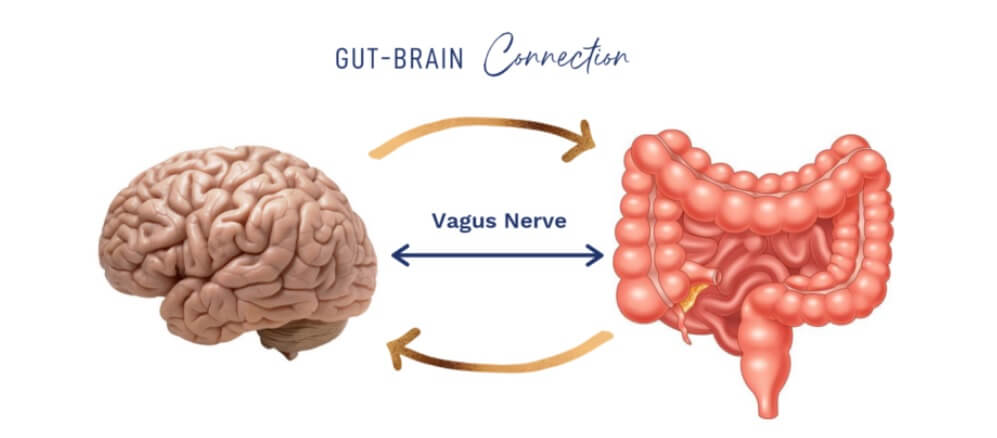
You’re likely familiar with the idea of the gut-brain connection and how stress can impact digestion. Take a moment to think back on a time when you had a sudden, extremely stressful situation or event… perhaps you suddenly experienced nausea, stomach cramps, or even worse had to flee to the bathroom!
It is clear to most of us how acute stress can send the gut into fits! But have you thought about how low-grade chronic daily stress may be impacting your gut?
What you may not know is that this connection between the brain and the gut is mediated by a very important nerve called the vagus nerve. Optimal functioning of this vital nerve is essential for a healthy gut and daily bowel movements. The good news is you can learn simple exercises to strengthen it and improve its function when it’s not working optimally.
It is important you know how this nerve works so you can be empowered to support it for good gut function!
Understanding the Vagus Nerve
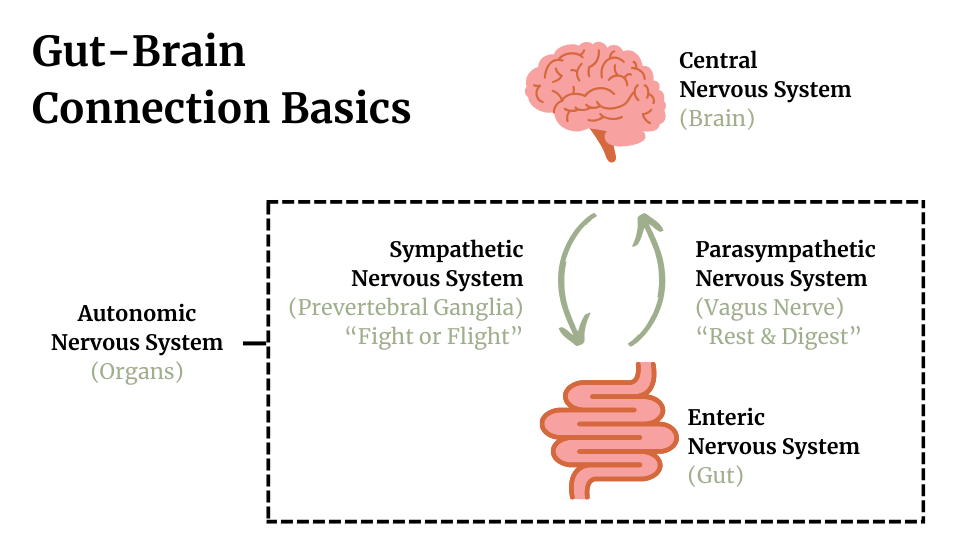
One of the roles of the nervous system is to regulate the functioning of our internal organs including the colon. The nervous system has two opposing functions:
- The parasympathetic nervous system regulates homeostasis, or what we describe as ‘rest and digest’. This is the relaxed and preferred state of the body and what we should be aiming for most of the time.
- The other is the sympathetic nervous system which regulates the stress response or what we might describe as ‘fight, flight or freeze’. You may have heard an analogy for this – great for running away from a lion or bear. In this state, good digestion is not going to be possible (or optimal).
When stressed, our body puts digestion on the back burner in favor of blood flow to our extremities and musculoskeletal system and other life-sustaining functions to help us stay alive. (It does not know the difference between fleeing from a lion or chronic stress caused by anxious ruminating thoughts). The digestive system basically shuts down and a lack of motility throughout the whole system can cause constipation.
The Link Between Vagus Nerve and Constipation
If you are stuck in a sympathetic-dominant state, or fight, flight, or freeze, for an ongoing period the vagus nerve can become weak and lose its “tone”.
Likewise, chronic constipation can weaken the vagus nerve’s tone, thereby disrupting and diminishing the communication between the gut and the brain. This communication breakdown can hinder peristalsis, the wave-like muscle contractions that move food through the digestive tract, leading to constipation and poor motility.
So both in a chronic state of chronic stress and/or constipation, vagal tone becomes weak.
The good news is… you can learn to strengthen the vagal tone and activate it for better function!
Activating Your Vagus Nerve
Recent research by neuroscientists has identified the following strategies to help stimulate our vagus nerve and get our neurons firing again.
- Gargling and gagging
- Singing and humming
- Alternate nostril breathing and deep breathing
- Cold exposure
- Exposure to sunlight
- Meditation
- Laughing
- Music therapy
- Supplements (probiotics and omega 3 fatty acids)
- Body work such as massage, acupuncture, cranial sacral therapy
- Essential oils
Daily Practices To Support your Vagus Nerve
Start with simple exercises like gargling and gagging. Gargling and gagging contract the back of the throat, which activates the vagus nerve. This combination is a great pair because you can do them around the time you brush your teeth. Gargling is simple and easy and can be something you may already do…gagging is more like sprint training for your vagus nerve and may take some getting used to. The idea is to incorporate these exercises into your daily routine, ideally twice a day.
Using a small amount of water, gargle vigorously for 30-60 seconds or more until your eyes tear up. Try for 30 seconds and build up. Gagging is best achieved using a tongue depressor or your toothbrush. Gently press on the back of your tongue to make yourself gag. Please do not poke the back of your throat or use a sharp object. Keep in mind, the goal is to elicit a gag reflex and ideally bring tears to your eyes.
Commit to gargling and gagging twice daily to activate the vagus nerve.
Next, move on to incorporating some of the other strategies such as singing and humming daily. This will just elevate your mood too!
Once you accomplish these strategies, then focus on daily sun exposure, good breathing techniques, and exercise (especially before meals)… these don’t cost a dime but will take planning and practice.
Next, consider investing in some body work on a monthly basis.
When it comes to essential oils, my absolute favorite is from Vibrant Blue called the Parasympathetic Blend. I use this behind my ear almost daily to support my vagus nerve and love that it offers a calming and relaxation effect.
(If you want to try it for yourself CLICK HERE and use code Welcome10 for 10% off your order)
Ready to Improve Your Vagal Tone?
Remember, your gut health is an essential component of your overall well-being and can be supported in many ways, not just by food and supplements, but LIFESTYLE habits! You know have another “tool” in your gut health toolkit.
Nerve retraining is slow and steady work but will help lay the foundation for a properly functioning digestive system that is free from chronic constipation and enhances good motility, overall wellness, and ultimately, a PEACEFUL gut!
For more ways to support your Vagus Nerve I created this handout for you with information taken from one of my favorite little books; Activate Your Nervous System by Dr. Navaz Habib.
Activate Your Vagus Nerve
With these simple & effective practices
