


Probiotics: What Works, What Doesn’t + How to Choose the Right One for Your Gut
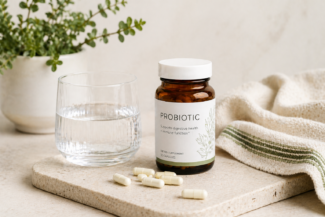
If you’ve ever felt confused, frustrated, or worse, after taking a probiotic…you’re not alone.
With over 2,000+ probiotic products on the market, probiotics have become one of the most talked about, and misunderstood, tools in gut health. From supplements and functional foods to beverages and even skincare, they’re everywhere.
But here’s the real question…
→ How do you know if what you’re taking is high-quality, safe, or even right for your gut?
Because in my clinical experience, probiotics can be incredibly helpful…or they can backfire!
Let’s Start Here…
Have you ever said yourself or heard someone say:
- “Probiotics made me feel worse.”
- “Probiotics completely changed my gut – I feel amazing.”
- “Probiotics did nothing for me.”
The truth is… all three of these experiences can be valid.
Because probiotics are not inherently “good” or “bad.”
→ They are context-dependent.
And this is exactly where most people get stuck.
Why This Matters More Than Ever
As the probiotic market continues to grow rapidly, most people are choosing products:
- Based on marketing
- Based on trends
- Or based on what worked for someone else
All within a space that is:
- Largely unregulated
- Heavily marketed
- And often lacking strong clinical evidence
→ Which means many people are left guessing… and often disappointed.
What I Want to Help You Do
In this guide, I’m going to help you cut through the noise and understand:
✔️ Why probiotics work for some people – and not for others
✔️ How to choose a high-quality, effective probiotic
✔️ When probiotics may not be the right place to start
✔️ My top 5 probiotics I use in clinical practice (and when to use them)
Stop guessing…and start making informed, confident decisions about your gut health.
A Quick Note Before We Dive In
My goal isn’t just to tell you what to take.
It’s to help you understand
→what your body needs right now
Because that’s where real healing begins.
Why Probiotics Work… or Don’t (And What Most People Are Missing)
At a clinical level, probiotics can be incredibly powerful tools when used correctly.
They can:
- Support microbial balance (crowding out harmful bacteria while supporting beneficial strains)
- Strengthen the gut lining and tight junctions (critical for preventing leaky gut)
- Influence immune signaling (remember, ~70–80% of your immune system lives in your gut)
- Produce beneficial compounds like short-chain fatty acids and neurotransmitters that impact everything from inflammation to mood
But here’s the part that often gets overlooked…
👉 Probiotics don’t work in isolation. They work within the environment of your gut.
And if that environment is not ready…they can absolutely backfire.
When the Gut Isn’t Ready
In cases of:
- SIBO (small intestinal bacterial overgrowth)
- Active gut inflammation
- H. pylori or other infections
- Toxic burden / impaired detox pathways
- Chronic stress or a dysregulated nervous system
Adding the wrong probiotic—or even the right probiotic at the wrong time—can:
- Increase bloating and gas
- Trigger histamine reactions
- Feed bacterial overgrowth
- Lead to brain fog, fatigue, or mood shifts
- Or simply… do nothing at all
💛 This is why bio-individuality isn’t just important – it’s everything.
And it’s also why, in my clinical practice,
👉 we don’t always start with probiotics.
Sometimes we prepare the terrain first.
What Truly Defines a High-Quality Probiotic
(And Why This Is Where Most Products Fall Short)
Choosing a probiotic isn’t about picking the most popular brand or the highest CFU count.
It’s about understanding:
sourcing, formulation, clinical trials, survivability, and clinical application.
This is where I see the biggest gap between:
- What’s marketed to consumers
- And what works in practice
Here’s exactly how I evaluate probiotics as a practitioner and gut expert:
🧬 1. Strain Specificity (This Is Non-Negotiable)
Not all probiotics are created equal – even within the same species.
- You want full strain identification (e.g., Lactobacillus rhamnoses GG)
- Because benefits are strain-specific, not species-specific
👉 One strain may support SIBO, while another supports H.Pylori
👉 Another may influence immune health, while another helps metabolic health
👉 Another may support leaky but, while another helps with mood and sleep
💡 Most over-the-counter probiotics fail right here.
📚 2. Clinically Studied & Evidence-Based
Not all probiotics are created equal – even within the same species.
This is where quality sourcing becomes critical.
I look for brands that:
- Invest in human clinical trials (not just animal or in vitro studies)
- Can show measurable outcomes (bloating, permeability, immune markers, etc.)
- Have transparent research backing their exact strains- not just the category
- Work with respected scientists and advisory boards and are leaders in microbiome research
👉 Because here’s the truth:
Anyone can put bacteria in a capsule.
Very few companies invest in proving that it actually works in the human body.
🧪 3. Quality Sourcing & Manufacturing Integrity (This Is Where I Get VERY Particular)
This is one of the most overlooked, and most important, factors.
When I evaluate a probiotic, I’m asking:
- Where are these strains sourced from?
- Are they genetically identified and verified?
- Are they produced in GMP-certified facilities?
- Is there third-party testing for potency and contamination?
- Is the label accurate through expiration—not just at manufacture?
👉 Because poor-quality probiotics can be:
- Under-dosed
- Contaminated
- Unstable
- Or completely ineffective by the time you take them
This is why I don’t recommend random store brands and many that just sit on our store shelves.
I use practitioner-grade products that I trust – because quality directly impacts outcomes.
🦠 4. Survivability (Can It Actually Do Its Job?)
A probiotic is only effective if it survives the journey from mouth to the intestines. If it can’t make it past….
- Stomach acid
- Bile salts
- Digestive enzymes
…. then it is ineffective.
This is why I look for:
- Spore-based probiotics (naturally resilient)
- Delayed-release delivery systems
- Strains with proven survivability data
👉 If it doesn’t reach your gut alive…it doesn’t matter how “good” it looks on the label.
⚖️ 5. Right Dose (More Is Not Better)
CFUs (colony-forming units) matter—but context matters more.
- Typical range: 5–50 billion CFUs
- Higher is not always better, (in some cases it can be short-term) but in some cases in may worsen symptoms
💡 The right strain at the right dose is better than mega-dosing random strains unless the gut terrain has been prepped for it.
🧪 6. Targeted Formulation (Match the Person, Not the Trend)
This is where true personalization comes in.
Different presentations require different strategies:
- Bloating / SIBO → often better with spore-based strains
- Constipation → specific lactobacillus/bifido strains
- Immune or Candida → entirely different strains
- H. pylori → targeted support like L. reuteri
👉 There is no universal probiotic. There is only the right probiotic for the right situation.
🚫 7. Clean, Thoughtful Formulation
I also evaluate everything around the probiotic:
- No unnecessary fillers, dyes, or allergens
- No added prebiotics (like inulin) unless intentional
- No “kitchen sink” formulations that try to do everything
👉 Especially in sensitive clients, less is often more.
❄️ 8. Stability & Storage (Potency Matters)
- Does it require refrigeration?
- Is it shelf-stable with proven potency?
- Does it maintain viability through expiration?
👉 Many lower-quality probiotics lose potency long before you take them.
⚠️ 9. Your Body’s Response (The Ultimate Feedback Loop)
This is the most important filter of all.
If you feel worse on probiotics, it’s not random.
It’s often due to:
- The wrong strain
- An imbalanced gut environment
- Histamine sensitivity
- Or a nervous system that doesn’t feel safe
Sometimes the most therapeutic decision is to pause, not push.
💛 The Takeaway (This Is Where Expertise Matters)
A probiotic should never be a guess.
It should be:
✔️ Intentional
✔️ Targeted to your current gut state
✔️ Sourced from high-quality, research-backed manufacturers
✔️ Matched to your overall physiology, immune and nervous system
Because the real question is not:
👉 “What’s the best probiotic?”
It’s:
👉 “What does YOUR gut need right now – and is it ready for it?”
Here is a guide to know what may be best for you!
Julie’s Top 5 Probiotics (and When to Use Them)
These are not random picks…
These are strategic tools I’ve used for years in clinical practice, carefully matched to the individual and their current gut state.
And more importantly – these are the probiotics I’ve seen consistently help clients move from symptoms like:
- constipation
- diarrhea
- reflux
- IBS
- SIBO
into real, sustainable relief!
Because when used correctly, the right probiotic at the right time can be incredibly powerful.
1. Soil-Based / Spore-Based Probiotics
Why they work:
Spore-based probiotics are uniquely resilient. They survive stomach acid and arrive intact to the gut, where they help recondition the microbiome environment – not just temporarily add bacteria.
In my experience, this is one of the most effective ways to begin restoring balance, especially in more complex cases.
Best for:
- Dysbiosis (bloating, gas, irregular stools)
- SIBO support (often better tolerated than traditional probiotics)
- Leaky gut / gut barrier repair
- Post-antibiotic or antimicrobial recovery
- Sensitive or reactive individuals
- Can be used more long-term
💛 One of my most trusted foundational “reset” tools.
2. Saccharomyces boulardii (Beneficial Yeast)
Why it works:
This is not a bacteria- it’s a beneficial yeast, which makes it incredibly unique.
It helps protect the gut from harmful microbes, supports immune signaling, and can restore balance without disrupting the microbiome – even during antibiotic use.
Best for:
- Acute or chronic diarrhea
- During and after antibiotics
- Candida / yeast overgrowth
- Gut infections
- Mold toxicity
- H. pylori support
💡 This is often one of my first go-to tools when the gut is actively inflamed or unstable.
3. Lactobacillus + Bifidobacterium Blends
Why they work:
These are the most well-researched, foundational strains that naturally exist in a healthy gut.
They help:
- Support digestion
- Produce short-chain fatty acids
- Regulate immune response
- Maintain microbial balance
However, timing and context matter.
Best for:
- General gut support
- Constipation or mild irregularity
- IBS (bloating, discomfort)
- To rebuild the gut after treatment and gut repair
⚠️ In my practice, I use these more strategically – often after the gut has been stabilized, not always at the beginning.
4. Lactobacillus reuteri (Pylopass™)
Why it works:
This is a highly targeted strain that works differently than most probiotics.
Rather than broadly influencing the microbiome, it binds to unwanted bacteria (especially H. pylori) and helps remove them, while also supporting the stomach’s protective lining.
Best for:
- H. pylori protocols
- Gastritis or stomach irritation
- Acid reflux / GERD
- Upper GI symptoms (burning, fullness, nausea)
💡 This is one of my favorite targeted tools when symptoms are more “upper GI” vs. lower gut.
5. Akkermansia muciniphila
Why it works:
This is what we call a next-generation probiotic.
It lives within the gut lining and plays a key role in maintaining the mucosal barrier, which is critical for reducing inflammation and supporting metabolic health.
Best for:
- Leaky gut / gut barrier repair
- Chronic inflammation
- Insulin resistance
- Weight / visceral fat concerns
- Cardiometabolic health
💛 This is where gut health and metabolic health truly intersect—and it’s an exciting area of emerging research.
A Note From My Clinical Experience
Even with the best probiotics available…
👉 Not everyone should start with one.
👉 And not every probiotic is right for every phase of healing.
This is where personalization matters most. Because the goal is not to “take a probiotic”… It’s to use the right tool, at the right time, for your body.
✨ Want to Take the Guesswork Out Completely?
One of the most powerful ways to personalize your probiotic strategy is through comprehensive stool testing.
In my practice, one test I often use is the GI-MAP Comprehensive Stool Test by Diagnostic Solutions Laboratory.
This advanced test provides a detailed look at:
- Your microbiome – good and bad bacteria
- Pathogens including parasites
- Digestion and gut inflammation
- Gut permeability (aka leaky gut)
- Gut Immunity
- And other key markers needed for targeted healing
Because as I like to say…
💛 “Test, don’t guess.”
This allows us to move beyond trial-and-error and create a plan that is truly personalized to your body, your symptoms, and your healing journey.
💛 Final Takeaway (This Is What I Want You to Remember)
Probiotics are not:
❌ A quick fix
❌ One-size-fits-all
❌ Something to take blindly forever
They ARE:
✔️ Strategic
✔️ Personalized
✔️ Often temporary
✔️ Most effective within a full gut-healing plan
🎁 Start Here: Your Next Step Toward a Healthier Gut
If you’re feeling like…
“This finally makes sense… but where do I actually start?”
I’ve created a few simple, supportive ways to help guide you – based on exactly where you are right now.
👇 Download My FREE Probiotic Guide

This is your step-by-step starting point to take everything you just learned and apply it with confidence.
Inside you’ll get:
- My exact framework for choosing the right probiotic
- When to use each type (and when not to)
- My trusted, practitioner-grade recommendations
✨ Plus access to my Fullscript dispensary with 15% off high-quality supplements I personally use in practice. (free to sign up)
👉 Want to Go Deeper? Start With Assessing the Health of your Gut!
If you’re not sure what your gut actually needs right now…
Take my NEWLY updated Gut Health Assessment to better understand your symptoms, patterns, and next best steps.
You’ll also receive:
- Educational insights to guide your healing – 1 email for 8 weeks.
- Supportive resources to help you move forward
- A clearer picture of what may be driving your symptoms
👉 Support Your Gut Through Food First
Healing doesn’t start with supplements – it starts with your foundation.
Download my FREE Anti-Inflammatory Gut Healing Shopping List to begin supporting your gut through simple, nourishing food choices.
👉 Ready for Personalized Support?
If you’re feeling stuck, overwhelmed, or like you’ve tried everything…
You don’t have to figure this out alone.
I offer Complimentary Consult Calls to:
- Understand your unique situation
- Identify what may be missing in your healing
- Determine if we’re a good fit to work together
Final Thoughts
If probiotics haven’t worked for you before…
💛 You didn’t fail
💛 Your body isn’t broken
You likely just needed:
- The right approach
- The right timing
- The right support
Things Are Changing… And You Don’t Have to Navigate This Alone!
The world of gut health can feel overwhelming- and it’s constantly evolving.
But there is a path forward.
I’ve been there… And I would love to come alongside you, guide you, and help you uncover what your body truly needs- so it can finally respond…
…and you can reclaim a peaceful gut.
🔗 Continue Learning
If you found this helpful, you may also enjoy:
- My blog on SIBO and why it’s often missed
- More resources inside my Gut Health Blog Library
